

Value engineering a renovation shouldn’t mean waiting until your contractor’s quote arrives and then randomly cutting things until the numbers work.
A much better approach is to start identifying your priorities during the design phase.
When I’m designing a renovation, I like to keep track of two things at the same time: what we would ideally like to include, and which selections or details we would genuinely be comfortable changing if we eventually need to reduce costs.
That distinction matters.
The goal isn’t to make every decision based on the lowest possible price. It’s to understand where spending more will meaningfully improve the home, and where a more cost-effective solution could work just as well.
Start Value Engineering Before You Have a Final Construction Price
There are parts of a renovation that can be difficult to price accurately until the design is developed enough for a contractor and trades to quote it properly.
That doesn’t mean you need to wait until then to start thinking about your priorities.
On one recent full-home renovation, we were reviewing cabinetry finishes in several secondary spaces.
The homeowners liked the idea of carrying an upgraded laminate finish into an office storage area, but it wasn’t nearly as important to them as some of the cabinetry elsewhere in the home.
Rather than immediately removing it from the design, we discussed whether they would be comfortable using a standard white melamine in that area if the overall renovation pricing came back higher than anticipated.
That’s an important question to answer while you’re designing.
Ideally, would we like this?
Yes.
If we needed to save here in order to protect something more important elsewhere, would we still be happy with the alternative?
Also yes.
That’s a very useful piece of information to have before construction pricing comes back.
Keep a Running List of Your Potential Trade-Offs
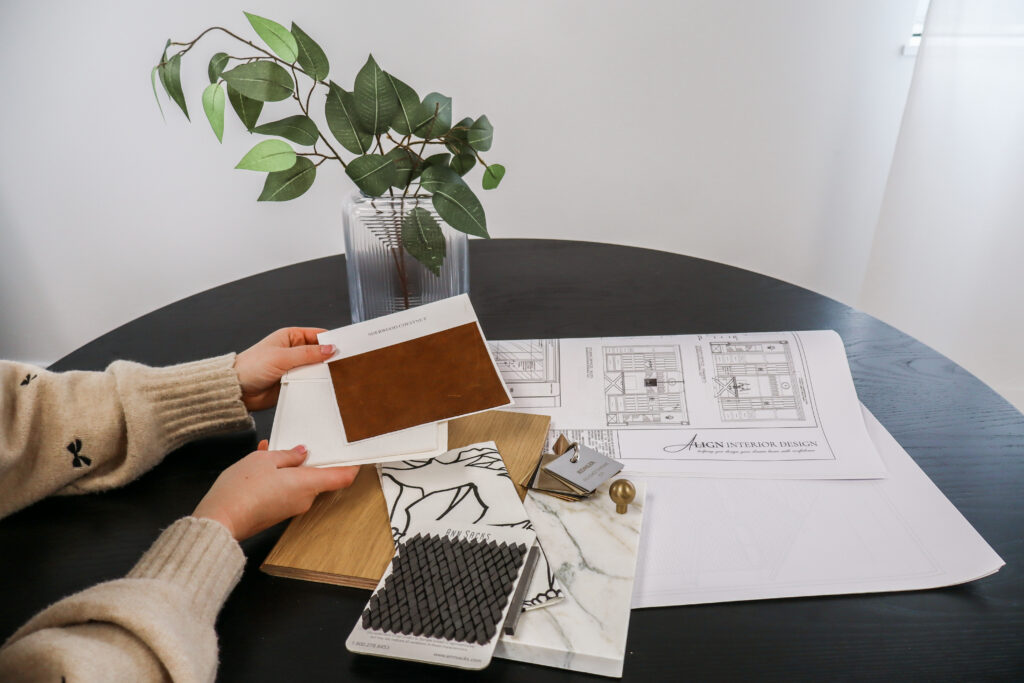
One of the things I often recommend to homeowners is keeping a small running list throughout the design process.
Think of it as your potential value-engineering list.
This isn’t necessarily a list of things you’re planning to remove.
It’s a list of decisions where you already know there is another option you’d be comfortable considering.
For example:
- an upgraded cabinetry finish versus standard white melamine
- a custom detail versus a readily available product
- a highly customized railing detail versus a simplified version
- a finish upgrade in a less visible room
Then, if your contractor’s quote comes back higher than your investment range, you aren’t looking at the entire design wondering where to begin.
You already know which items you would be willing to revisit.
More importantly, your contractor can price the actual alternatives and tell you how much each change would save.
That allows you to make decisions based on real numbers instead of assumptions.
Don’t Spend the Same Way in Every Room
Another part of thoughtful value engineering is recognizing that every space in the house doesn’t need the same level of finish.
On this particular project, we were using stained wood cabinetry in the kitchen because getting the colour and finish right there was important to the overall design.
In some secondary areas, however, we could use a coordinating laminate instead.
It wasn’t going to be an exact match to the kitchen cabinetry, but it could relate closely enough to feel intentional while providing a more cost-effective solution.
And in an interior office storage area, the homeowners ultimately decided that standard white melamine was perfectly adequate.
They would rather direct that portion of their budget somewhere else.
That’s the kind of compromise I like.
You’re not taking something away simply because it costs money.
You’re deciding where you’ll actually notice and appreciate the upgrade.
Pay Attention to How Materials Are Purchased
Sometimes value engineering happens at a much smaller level.
In the same renovation, we had selected quartz for the laundry room and were considering using that material for a small key-drop countertop in the mudroom.
The logical design choice was to carry the quartz into that area.
But there was an important caveat.
If that small countertop could be fabricated using an off-cut from material we were already purchasing, it made sense.
If that tiny countertop meant purchasing an additional slab specifically to accommodate it, I wanted the specification changed to the coordinating laminate instead.
The appearance of one small secondary surface wasn’t important enough to justify disproportionate spending.
This is why materials shouldn’t always be selected one room at a time.
Countertop slabs, tile quantities, cabinetry materials and other finishes are often purchased in ways that affect the cost of multiple spaces.
Looking at the house collectively can reveal opportunities that aren’t obvious when every room is treated independently.
Not Everything in a Custom Home Needs to Be Custom
Another common misconception is that once you’re investing in custom cabinetry or a significant renovation, every detail should also be custom fabricated.
It doesn’t need to be.
We needed additional spice storage in this project’s pantry.
A cabinetry company could absolutely fabricate a custom solution.
But if a simple wall-mounted spice rack does the job, there may be very little reason to spend custom-millwork dollars solving that particular problem.
I’d rather use custom fabrication where it materially improves the design, function or integration of the space.
The same principle came up when we were discussing the stair railing.
The homeowners preferred a very clean all-metal design, but that particular look involved more custom metal fabrication.
Instead of immediately changing the design, we discussed pricing the preferred version while also understanding what could change if we needed to reduce the cost.
Prefabricated spindle components could potentially simplify part of the fabrication.
A wood handrail could be another option if the metal version ultimately wasn’t where they wanted to spend.
The important part is that we understood the alternatives before we needed them.
Don’t Value Engineer Away the Function
Cost isn’t the only consideration.
Sometimes the less expensive option is completely appropriate.
Sometimes it compromises the reason you were renovating in the first place.
That is why I don’t think value engineering should simply be a contractor or designer pointing at the most expensive items and replacing them with cheaper ones.
You have to ask what each decision is doing for the home.
Is it primarily aesthetic?
Does it improve durability?
Does it solve a functional problem?
Is it highly visible?
Will you interact with it several times every day?
Could the less expensive alternative accomplish essentially the same thing?
Those questions help determine whether something is a good candidate for value engineering.
Design the Preferred Version, But Know Your Alternatives
There’s also a balance here.
I don’t necessarily want homeowners compromising everything during the first stage of design because they’re afraid of what something might cost.
In some situations, it makes more sense to document and price the preferred solution first.
Then we can see the actual number.
If the cost is reasonable within the larger renovation, great.
If it isn’t, we already understand the alternative.
That is very different from designing without regard for budget.
The difference is that the decision is intentional.
A Better Question Than “How Can We Make This Cheaper?”
When you’re value engineering a renovation, I think the better question is:
Where will spending this money make a meaningful difference to us?
Sometimes that means keeping the custom cabinetry.
Sometimes it means choosing the quartz.
Sometimes it means using the off-cut if one is available and happily switching to laminate if it isn’t.
And sometimes it means buying a simple storage accessory instead of having one custom fabricated.
The goal isn’t to end up with the cheapest possible version of your renovation.
It’s to make sure the investment is going toward the parts of the home that matter most to you.
Frequently Asked Questions About Value Engineering a Renovation
Value engineering is the process of looking at where your renovation budget is being spent and deciding which details are worth protecting, which could be simplified, and where a more cost-effective alternative could work just as well.
The goal is not to make the renovation as cheap as possible. It is to make sure your investment is going toward the parts of the home that matter most to you.
Ideally, value engineering starts during the design phase, before the final construction quote comes back.
As decisions are being made, it can be helpful to identify which selections or details are priorities and which ones you would be comfortable revisiting if needed. That way, if pricing comes back higher than anticipated, you already have a thoughtful list of potential changes rather than having to make rushed decisions.
I look at what each decision is actually doing for the home.
Is it highly visible? Does it improve function or durability? Will you interact with it every day? Is there a more cost-effective option that would accomplish essentially the same thing?
Sometimes it makes sense to spend more on custom cabinetry, a key material, or a functional feature. In another area, a simpler finish or readily available product may be completely appropriate.
The goal is to prioritize your investment rather than apply the same level of spending to every room and every detail.
