

Let’s talk about renovating your bathroom.
Sometimes, things go perfectly; you come in under budget, that last piece of tile slides into place with the most satisfying precision and you find accessories that couldn’t match any better.
Sometimes, you find wasps in the ceiling, water damage in the walls or an element of the renovation causes way more problems than you expected.
Here are some common mistakes that can happen during a bathroom renovation and how to avoid them, so you can DIY with confidence.
Asbestos First, Demo Later
The Mistake: Not testing for asbestos before starting demolition.
It’s toxic, invisible and is often lurking in the tiles, drywall and insulation of older homes, especially those built pre-1990s. It might seem like a great idea to just start tearing down walls, but when potentially dealing with an airborne carcinogenic in your home, skipping an asbestos test is not worth the long-term risk.
Why It’s a Problem:
Asbestos has cancer-causing particles in it, and disturbing it without proper precautions and equipment releases those hazardous fibres into the air, posing significant health risks to you and your family.
What to Do Instead:
Before you even think about touching that sledgehammer, hire a professional to test for asbestos. If it’s present, a certified company should handle its removal to ensure it’s disposed of properly and your space is safe. Plan ahead by Pre-booking these services to avoid renovation delays.
For more details on asbestos testing, check out this resource: Government of Canada – Asbestos Guidelines.
Bonus Tip: While you have walls and floors exposed, it’s the perfect time to address soundproofing (extra nice if your bathroom is in a high traffic area!).
- Add Roxul or fibreglass insulation – This is the most common way to help with sound dampening.
- Install Resilient Bars (ResBars) in the ceiling to reduce sound vibration – This is an upgrade for when you really want that noise separation. It’s less common in residential bathrooms, but some sensitive sleepers really value it.
- Upgrade to QuietRock drywall for added noise reduction- If noise control is a priority, it’s good to inquire about whether a specific type of drywall is more cost-effective and potentially just as effective as different applications like ResBars.
Don’t Let Your Money Go Down the Drain
The Mistake: Making poor plumbing decisions.
There are some things, like changing fixtures, that less experienced renovators can tackle fairly easily. But when it comes to altering plumbing layouts, not having the right expertise may result in incorrect installation, which in turn can lead to damage you might not even see before it’s too late.
Why It’s a Problem:
Incorrect plumbing installations can result in a whole array of issues including leaks, reduced water pressure, or even flooding. While it may seem like a good idea in the present, it could cost you far more to fix avoidable damage in the future.
What to Do Instead:
- Try to keep the plumbing in its original layout
- Replace old pipes with durable materials like PEX for improved performance
- Consult a professional plumber for complex changes, like rerouting water lines. (Honestly, I always encourage hiring the proper professionals for each step even if you are hiring and managing the project yourself.)
Let’s Shed Some Light on The Situation
The Mistake: Overlooking lighting and ventilation.
It’s so easy to get lost in that beautiful tile and those perfect fixtures. Or choosing your other finishing touches.
I get it. It’s fun to bring your vision to life. But, there are elements that many DIYers often forget that are critical to a functional bathroom: lighting and ventilation.
Why it’s a Problem:
- Inadequate task lighting makes everyday routines like shaving or doing your makeup a struggle (trust me, you will notice if it’s not there)
- If the room is not properly ventilated it will lead to mold growth and moisture damage
What to Do Instead:
- Install layered lighting, including task (think pendant or sconce lighting with the bulb at 60” off the floor so it side lights your face), ambient (like dimmable pot lights), and accent options (we all love a subtle LED niche glow)
- Upgrade your fan to not only handle bathroom humidity effectively but also be whisper-quiet. (There are legit “whisper-quiet” models you can find at places like Home Depot that are great.)
Nothing Splashy About It
The Mistake: Underestimating waterproofing needs.
You shower in there. Water flies out of sinks when you’re washing your face. It’s hard to avoid the room getting a little wet. Waterproofing is one area where cutting corners can result in long-term damage to your bathroom—and your wallet.
Why It’s a Problem:
Improper waterproofing leads to leaks, mold, and structural damage that can cost thousands to repair.
What to Do Instead:
- Use high-quality waterproof membranes for walls and floors
- Apply waterproofing sealant to shower and tub areas
- Follow application instructions carefully or if possible, consult a professional for peace of mind
Always Be the One With the Plan
The Mistake: Skipping Documentation and Planning
A successful bathroom renovation starts with knowing what your finished product is. Skipping out on documentation and planning can leave you scrambling mid-project. So, when you’re starting a DIY bathroom renovation, have a plan before you lay the first tile.
Why It’s a Problem:
Without a clear plan, it’s easy to overspend, miss important steps, or encounter delays.
What to Do Instead:
- Create a detailed renovation checklist that includes your budget, timeline, and materials list
- Use professional templates to keep track of every detail
Pro Tip: Check out our customizable renovation templates in the Align Interior Design Shop for a head start.
Plan Your DIY Bathroom Renovation with Confidence and Avoid Costly Mistakes
A successful DIY bathroom renovation isn’t just about choosing beautiful finishes. It’s about knowing exactly what to choose, in what order, and how each decision affects the final result. Most renovation mistakes happen because homeowners don’t have a clear plan for their tile selections, plumbing fixtures, lighting, and layout details before construction begins.
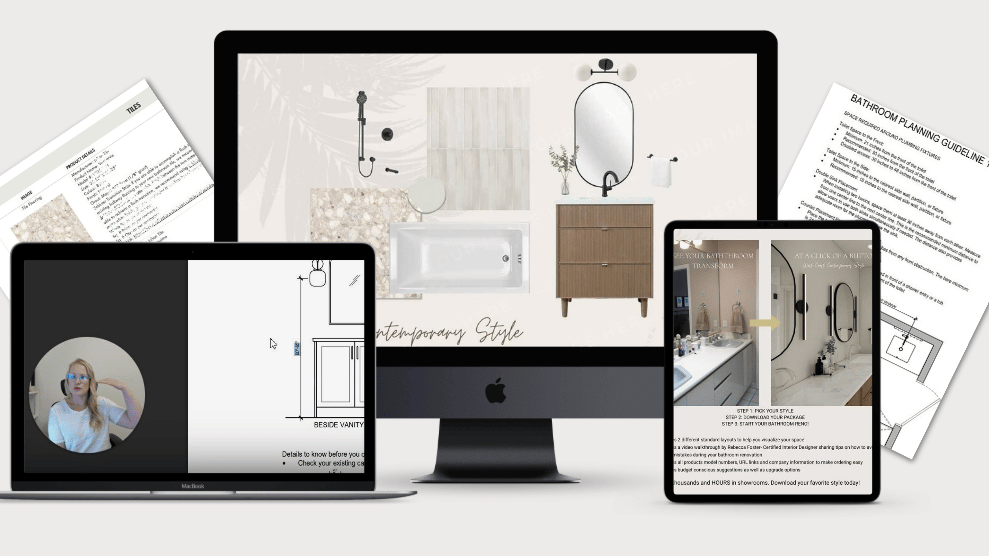
If you’re planning a DIY bathroom renovation and want to avoid costly mistakes, my Bathroom Design Guides provide a clear, step-by-step framework to help you make the right decisions from the start.
Each downloadable guide includes:
• A complete bathroom design checklist so you know exactly what needs to be decided
• Professionally curated finish selections based on cohesive design styles
• Product specifications and contractor-ready information
• Video tutorials explaining upgrade options and explaining what to prioritize
• Guidance to help you avoid common DIY renovation mistakes
Instead of spending hours researching and second-guessing your choices, you can follow a proven design plan and move forward with clarity.
These guides are based on the same professional design process I use with my full-service interior design clients.
And as a bonus don’t forget to grab your free renovation preparation checklist: 6 Steps to Take Before Hiring for Any Renovation. This checklist helps you prepare properly before hiring contractors so you can avoid delays, budget overruns, and preventable mistakes.
Frequently Asked Questions About DIY Bathroom Renovations
What is the first step in planning a DIY bathroom renovation?
The first step is creating a clear plan that outlines your layout, fixture selections, tile choices, lighting, and budget before demolition begins. Having these decisions made early helps prevent delays and costly changes during construction.
What decisions need to be made before renovating a bathroom?
You’ll need to finalize your tile selections, vanity, plumbing fixtures, lighting, mirror, paint colour, and layout details before construction begins. Having these decisions made early prevents delays and costly changes.
How do you avoid mistakes during a DIY bathroom renovation?
The most effective way to avoid mistakes is to follow a clear design plan that outlines exactly what to select and how everything works together before demolition begins.
Do I need a designer for a bathroom renovation?
While hiring a designer provides fully custom support, structured design guides can help homeowners confidently complete a bathroom renovation on their own with professionally curated selections.
Ready to move forward? Browse the Bathroom Design Guides and choose your style.
