

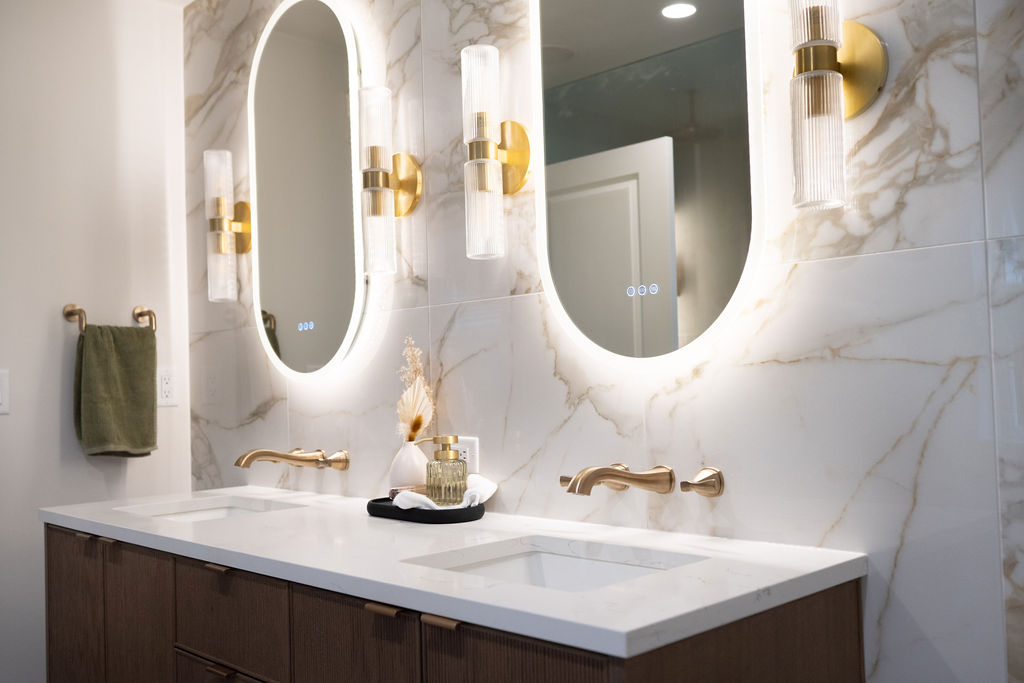
If you’ve been spending way too much time on Pinterest collecting bathroom inspiration, and your heart is saying yes but your wallet is saying no, you’re in the right place.
Whether you’re renovating to increase your home value or you just have that little itch for a change toward something more your style, bathroom renovations are a common update and a popular one to DIY.
And we hear you, renovations can get expensive and may seem out of reach.
The good news? You can create a beautiful bathroom on a budget that makes sense for you. Here are some tips from a certified residential interior designer that will help you get started on your bathroom renovation without breaking the bank.
Let’s Talk Dollars
If you’ve been around here for a while, you know that this has got to be step one. Without a budget, you’re setting yourself up to spend way more than need to, to get the result you’re dreaming of.
When setting your budget, you need to consider the project as a whole, especially in the following areas:
Your current bathroom condition: What needs to be replaced? Does the layout need to change?
Your priorities: What are the most important areas of your update? What are the items you’re more or less willing to compromise on?
Your emergency buffer: How much are you keeping in reserve to cover any of those unwanted surprises? We typically recommend 10-15% of your budget.
Pro Tip: A budget tracker is a great tool to help keep your project finances organized. Check out our resources page for templates and resources for your bathroom reno.
DIY Demolition
Demolition is one renovation expense where you can save hundreds of dollars by grabbing a crowbar and doing it yourself. Before you start ripping out walls though, be sure you have everything you need to make your demo day safe and productive.
Get your tool kit ready:
- Heavy-duty tools for the big jobs, including crowbars, jack hammer, circular or reciprocating saw
- A variety of tools for smaller removals, such as screwdrivers, hammer and wrench
- Items for clean up, including drain covers, shop vacs and heavy-duty garbage bags
- A rented dumpster or truck to take materials to your local dump. (Quick Tip: It’s a good idea to research how your materials need to be separated BEFORE you go.)
Protect yourself:
- Gloves to protect your hands from any sharp corners or questionable materials
- Goggles to keep your eyes free from dust and debris
- Respirator to block all the particles you’ll be disturbing during the demo
Protect your utilities: It can be fun, cathartic even to tear down walls and break tiles with a hammer. What you don’t want, however, is to accidentally damage your pipes or electrical – especially if you’re not planning on replacing them. So swing, cut or pry with care!
An extra safety tip: I know I’ve said this before, and I’ll say it again, if you have an older home, (especially pre-90s), please get an asbestos test prior to demolition, to ensure you’re not putting your health at risk when you start knocking down walls.
The Savvy Way to Save on Materials
Your finishes don’t have to cost hundreds or even thousands of dollars to create an amazing bathroom. Once you have a vision, you can start shopping around, watch for sales or clearance and check out local salvage centers or places like Habitat for Humanity Restore.
Another way to save money on materials is to trade out the more expensive finishes with budget friendly alternatives:
- Laminate countertops that mimic natural stone instead of the real deal. (Not only cost-effective, but also super easy to care for – bonus!)
- Choose subway tiles for a classic, low-cost backsplash. (Don’t forget that grout colour can totally change the vibe of any subway tile, elevating it even further!)
- Install a waterproof vinyl flooring as an alternative to ceramic.
- If your space allows for it, choose a beautiful prefabricated vanity.
And while all of these solutions are a great way to keep your budget in check, there are some areas where it’s ok to splurge. For example, if you have a high-priority item, specialty or timeless fixtures, or high-use items, such as faucets. Just remember to include your splurge item in your budget!
Budget-Conscious Transformations
Even if you’re not prepared to do a full-scale bathroom revamp there are still loads of easy ways to refresh your space.
Just add paint: A little bit of paint on existing walls and cabinets can change the whole feel of a bathroom. Remember to choose a moisture-resistant paint for longevity. (Benjamin Moore’s Bath and Spa paint in the matte finish is my favorite.)
An extra: Though it’s not a paint product, micro-cement is a good option for refreshing existing tiles to complete the look.
Pro tip: If you’re concerned about resale value, stick to neutral colours for a bright and airy look. My favorite bathroom paint colours are Benjamin Moore White Dove OC-17 and Benjamin Moore Silver Satin Oc-26!
Accessory overhaul: Another great way to update your space is to change out your accessories. Change out the hardware on your cabinets, find a mirror with tons of character from a thrift store, or even add some shelving for more storage or a fun place to display pieces that show off your style.
Find Long-Term Savings
Have you ever considered water-saving fixtures? There are lots of cost effective options to choose from that won’t sacrifice your style, yet will save you long-term on utility bills. Fixtures like low-flow toilets and aerated faucets are only a couple of options you can consider while increasing your water efficiency.
Pro tip: There are many rebates and incentives available for installing water-saving products – be sure to ask your local supplier, especially if you plan on upgrading your water heater.
A Bonus: Avoid These Common Mistakes
As with any renovation projects, there are always little traps that are easy to fall into. For example:
- Skimping on waterproofing materials.
- Ignoring lighting upgrades.
- Overlooking proper ventilation.
We cover these in-depth, plus a few more common mistakes in this blog. So be sure to check it out some of our other posts while you’re planning!
Plan Your Bathroom Renovation the Right Way from the Start
Saving money on your bathroom renovation isn’t about choosing the cheapest materials. It’s about making the right decisions early so you can avoid costly mistakes, prevent rework, and ensure everything comes together exactly as planned.
If you’re planning to DIY your bathroom renovation and want clarity on what to choose, in what order, and how everything works together, my Bathroom Design Guides provide a complete, step-by-step framework to help you move forward with confidence.
Each downloadable guide includes:
• A complete bathroom design checklist so you know exactly what decisions need to be made
• Professionally curated finish selections based on cohesive design styles
• Contractor-ready product specifications and installation guidance
• Video tutorials explaining upgrade options and where to invest vs save
• A proven design plan to help you avoid costly renovation mistakes
These guides are based on the same professional design process I use with my full-service interior design clients, adapted for homeowners who want to confidently manage their own renovation.
Instead of spending hours researching and second-guessing your choices, you can follow a clear, professionally developed plan.
Browse the Bathroom Design Guides and choose the style that fits your renovation.
Not ready to choose your design style yet? Start with my free renovation preparation checklist, 6 Steps to Take Before Hiring for Any Renovation. This checklist helps you prepare properly so you can avoid delays, budget overruns, and preventable mistakes.
Frequently Asked Questions About Budget Bathroom Renovations
How can I renovate my bathroom on a budget without making mistakes?
The most effective way to stay on budget is to plan your tile, fixtures, and finishes before construction begins. Having a clear design plan prevents costly changes and delays.
Where should you save vs spend in a bathroom renovation?
It’s often safe to save on mirrors, accessories, and prefabricated vanities, while investing in quality plumbing fixtures, tile installation, and waterproofing.
Do I need a designer for a budget bathroom renovation?
While a designer provides fully custom support and is highly recommended when you are changing layouts or require a building permit due to layout changes, structured design guides allow homeowners to confidently complete their renovation using professionally curated selections for renovations when just the materials are being changed.
